Mobile:
081 737 0025
Physical address:
33 Helen joseph Road,
Bulwer, Berea, Dbn, 4083
Mobile:
081 737 0025
Physical address:
33 Helen joseph Road,
Bulwer, Berea, Dbn, 4083

What actually happens to sand when you build on it in Umdloti?
It is a fair question, because on the surface Umdloti and Zinkwazi stands look easy. Flat, pale sand, good drainage, sea breeze. Yet the engineering behind those stands is more demanding than most inland clay sites in Kloof or Hillcrest. The reason is simple: coastal beach sand along the KZN North Coast is loose, variably silty, fine-grained, and often saturated within 1.2m of ground level.
When that sand is dry, it can feel firm. When the water table rises after heavy KZN rain, its bearing capacity changes dramatically. Published research on silty sandy soil (SM) shows bearing capacity decreases 70-75% below water level and 25-30% above water level. That single fact explains why standard strip footings that work in Durban North fail on coastal plots Umdloti.
This guide breaks down how proper sandy soil engineering Umdloti is designed, what SANS 10400-H requires, which reinforced foundation options work on this coast, and what they realistically cost in 2026 – so you can plan reinforced foundations Umdloti Zinkwazi without risking a R180,000 to R550,000 rectification bill.
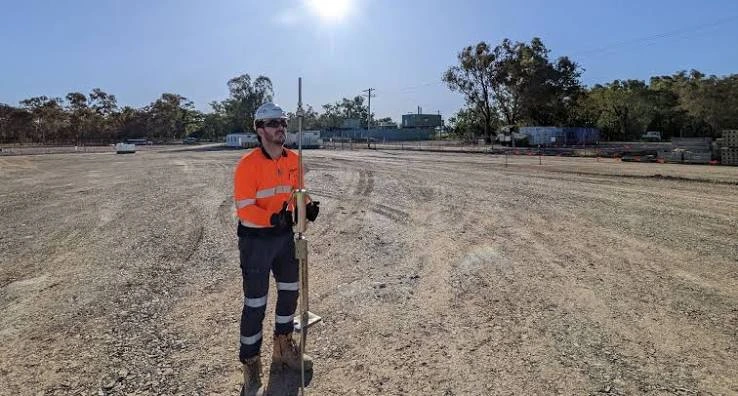

There is a common assumption that sand is ideal because it drains. In coastal engineering, drainage is only half the story.
Cohesionless behaviour is the core issue.
For cohesionless soils like sandy soil, the bearing capacity is significantly influenced by confining pressure provided by soil weight above foundation level (surcharge). Translation: sand has almost no internal stickiness. It relies on weight and confinement to stay in place. Reduce confinement, add water, or apply a concentrated load, and it can shear.
In Umdloti and Zinkwazi, the founding material is typically described in geotechnical logs as “very silty fine sand and variably sandy silt, comprised loose, variably silty fine-grained sandy material” found at approximately 1.2m below ground level. That description comes from coastal founding improvement studies for similar South African coastal conditions, and it matches what we see in North Coast lab reports.
A second factor is documented failure modes. ECSA Practice Note No. 2015/2 – The results of a failed Concrete Raft foundation records a coastal estate situated on a former borrow pit excavated for road building materials. The engineer elected to follow the soil raft approach but instead of replacing full depth of fill with compacted backfill, a “stiffened concrete” raft was adopted. The result was failure. The lesson for sandy soil engineering Umdloti is clear: a raft is only as good as the soil preparation beneath it.
Quantitatively, research on coastal beach sand in similar marine environments measured proportional limit load approximately 200 kPa, ultimate load 250 kPa, characteristic value 125 kPa with general shear failure as dominant mode. For a typical 280 sqm double-storey home imposing ∼4,200 kN on foundations, you need a dependable safe bearing of at least 150 kPa. Unimproved loose Umdloti sand often tests at 60-85 kPa in the dry season and less when saturated. The gap has to be engineered closed.
SANS 10400-H does not give you a free pass for sand.
Two clauses are critical:
Clause (c): The soil supporting such foundation is not a heaving soil or shrinkable clay or a soil with a collapsible fabric.
Umdloti sand is not expansive, but loose silty sand can be collapsible and compressible when saturated. That triggers the need for engineered founding.
Clause H2.2: Any such foundation shall be constructed in concrete having compressive strength not less than 10 MPa at 28 days, or be mixed in proportions 1:4:5 (cement:sand:coarse aggregate).
That is the minimum for deemed-to-satisfy strip footings – but deemed-to-satisfy does not apply when you have silty sands, sands, sandy and gravelly soil classified as Site Class C – Compressible and Potential Collapsible or Site Class S.
Per SANS 10400-H Section 4.2, geotechnical classification is mandatory. For coastal plots Umdloti, the relevant designations are:
Other rules that govern sandy soil engineering Umdloti include compaction of insitu soil below footings and remove unsuitable material up to depth and width of 1.5 times foundation. Both come from NHBRC-linked guidance under SANS 10400-H. They are not optional.
In practice, this means every Umdloti plot needs a light penetrometer or plate load test before foundation design. Bearing capacity determination of sandy soil layer using light weight penetration test is standard practice, and it quantifies what assumed tables cannot.
Numbers help here more than adjectives.
In a sandy soil with shallow foundation, bearing capacity theory shows ultimate capacity is proportional to footing width for strip footings and diameter for circular footings. For example, ultimate bearing capacity of 30cm plate 120 kN/m2 can extrapolate to 320 kN/m2 for 80cm square footing under same conditions. But that relationship assumes dry, medium-dense sand.
In Umdloti, conditions are rarely dry and medium-dense throughout.
Geotechnical references for Cape Flats sands – whitish windblown sands covering approximately 460 km2 providing founding for rapid development – are highly relevant because the depositional environment (Quaternary windblown marine sand) is similar to Umdloti. Those sands require knowledge of engineering behaviour for suitable foundation design. Umdloti is the same: windblown marine sand, variable density, high water table.
For design, engineers work with safe bearing values after applying factor of safety 2 to 4 (marine applications 1.5-2.5). If ultimate is 250 kPa (measured in medium-dense beach sand), safe is 125 kPa – right on the edge for residential. If loose sand tests at 120 kPa ultimate, safe is 60 kPa – insufficient.
This is why sandy soil engineering Umdloti is not about guessing – it is about testing and improving.
Instead of one-size-fits-all, coastal engineering offers a hierarchy. Here is how each option applies to reinforced foundations Umdloti Zinkwazi and what it costs in 2026 Rands.
Option 1: Engineered Soil Raft – Excavate, Replace, Compact – Most Common for Umdloti
This remains the most cost-effective for typical Umdloti plots where loose sand extends 1.2m to 1.5m.
Method: Excavate unsuitable material to depth of 1.5m – TLB will suffice for soft material per SANS 10400-H soft classification. Replace with G5/G6 granular material compacted in 150mm layers to 93% Mod AASHTO. Then found reinforced strip footings with foundation pressure not exceeding improved bearing.
Performance: Improves safe bearing from 60-85 kPa to 150-180 kPa. Meets compaction of insitu soil below footings requirement.
Cost breakdown for 260 sqm footprint: Excavation and spoil R26,000-R32,000, import 75m3 @ R380 = R28,500, compaction testing and DCPs R8,500-R11,000, engineering sign-off R12,000-R16,000. Total R75,000 to R89,500. Compared to rectifying cracked masonry and floors at R180,000 to R350,000, this is preventative engineering.
This is the baseline for sandy soil engineering Umdloti.
Option 2: Geosynthetic Reinforced Soil Raft – When Loose Sand Goes Deeper
In parts of Zinkwazi and La Mercy, loose sand can extend beyond 1.8m. Full replacement becomes uneconomical.
Solution: Founding improvement using geosynthetics – geosynthetic reinforced soil raft foundation. This option involves installation of geosynthetic reinforcement to create a composite mattress.
Build-up: Excavate 800mm, place separation geotextile, 300mm G5, biaxial geogrid 40kN, 300mm G5, second geogrid, 300mm capping. Then reinforced concrete raft or reinforced strip.
Why it works for coastal plots Umdloti: It bridges loose, variably silty fine-grained sandy material without deep excavation, and it controls differential settlement. Design criteria: maximum differential settlement in foundation on clayey soils and sandy soils should not exceed 40mm and 25mm respectively – raft foundation on sand 40 to 65 mm. Geosynthetic raft typically achieves <15mm differential – well within limits.
Cost: R38,000 to R68,000 above soil raft cost, but saves R95,000 to R140,000 versus piling. Ideal for reinforced foundations Umdloti Zinkwazi where water table is high.
Option 3: Stiffened Raft or Compensated Raft – Beachfront and High Water Table
For front-row coastal plots Umdloti where water table is 0.8m-1.2m and exposure is high, a slab that floats is required.
Definition: Raft Foundations: Imagine giant concrete slab that covers entire footprint. Perfect for areas with weak or unstable soil. Raft distributes weight evenly, preventing differential settlement. It’s like floating island for building.
Two variants apply:
If bearing is still insufficient, short frictional piles cast into prebored hole suitable in shallow very dense/stiff soils or rock, or driven piles in thicker granular profiles are added to raft – creating piled raft.
Cost: R175,000 to R315,000 for 300 sqm stiffened raft vs R90,000-R110,000 for strip, but it provides temporary stability in event of sinkhole forming, giving time to evacuate (relevant for dolomitic influence pockets) and eliminates differential settlement risk. For sandy soil engineering Umdloti beachfront, it is often the only code-compliant option.
Grouting is supplementary: Bearing capacity improvement of loose sandy foundation soils through grouting – cement grouting can improve safe bearing from 60 kPa to 140 kPa at R320-R380 per m2. Useful for isolated weak pockets.
Yes – subtle but important.
Umdloti is predominantly clean to slightly silty beach sand with shallow water table. Zinkwazi often has 300-600mm organic topsoil and root mat overlying dune sand, then loose sand. That organic layer is highly compressible and must be removed – it cannot be compacted.
Additionally, Zinkwazi plots are often larger and more exposed to wind-blown sand accumulation, which changes surcharge loading. In sandy soil, bearing capacity is significantly influenced by confining pressure provided by soil weight above foundation level (surcharge) – so additional windblown cover can actually help bearing, but organic cover hurts.
In both areas, testing should be done in wet season worst-case. A plate load test in August (dry) may show 320 kN/m2 for 80cm footing based on 30cm plate 120 kN/m2, but same test in February after rains may show 180 kN/m2 due to saturation. Design for saturated condition.
For sandy soil engineering Umdloti, the conservative approach is standard: design for water table at 1.0m even if measured at 1.5m during investigation.
Our process is deliberately reverse – we engineer ground before we finalise architecture.
Ground first, then drawings.
Before any architectural finalisation, we commission bearing capacity determination using light weight penetration test plus lab grading. We look for safe bearing capacity computed from results of direct shear tests conducted on samples of medium sand compacted at different relative densities. If lab shows maximum safe bearing below 100 kPa in natural state, we do not attempt to force strip footings.
Foundation type matched to quantified bearing.
If improved bearing after soil raft reaches 150-180 kPa, we use reinforced strip. If not, we move to geosynthetic reinforced soil raft foundation or stiffened raft. Decision is based on measured allowable axial and lateral load capacity for cast in-situ bored piles where applicable, but we prefer ground improvement over deep foundations for cost.
Architecture adapted to engineered level.
Our architects at 33 Helen Joseph Road, Durban receive founding level before setting finished floor level. If raft requires 500mm minimum depth, floor level is adjusted to avoid cutting raft for services. This prevents compromising reinforced foundations Umdloti Zinkwazi.
Fixed price with soil clause.
Our JBCC includes: “Foundation price fixed for improved safe bearing capacity of 150 kPa after soil raft – no hidden sandy soil, water table, or compaction costs after geotechnical report.” Client knows cost of sandy soil engineering Umdloti upfront.
Technical references we rely on for every Umdloti job are public and verifiable: SAICE – Founding improvement using geosynthetics at https://www.saice.org.za, ECSA – Practice Note – results of failed Concrete Raft foundation on coastal estate former borrow pit at https://www.ecsa.co.za, Geotechnical properties of Cape Flats sands – whitish windblown sands 460 km2 at https://www.scielo.org.za – your authority for windblown marine sand behaviour, Raft Foundation Types – typically used in weak soils where deep foundations not feasible at https://www.piling.co.za, D&I Associates – Raft Foundations required in dolomitic areas, acts as floating in sandy soil at https://www.diassociates.co.za, Design of Raft Foundations – maximum differential settlement 40mm clay, 25mm sand, raft on sand 40-65mm at https://www.theconstructor.org, Bearing capacity determination of sandy soil layer using light weight penetration test – 70-75% decrease below water at https://consensus.app.
Absolutely not. You should be excited – Umdloti has some of the best coastal living in KZN. You just need to respect the sand.
Sandy soil is not bad soil. It is just honest soil – it tells you quickly if you got it wrong. Clay hides problems for years. Sand shows settlement in 40 to 65 mm range immediately if you under-design. That honesty is actually good, because we can fix it before you move in.
The three numbers to remember for sandy soil engineering Umdloti:
80 kPa – typical loose Umdloti beach sand bearing without improvement – not enough for double-storey
150 kPa – target after soil raft improvement – safe for most homes
25mm – maximum differential settlement allowed on sand – our geosynthetic rafts achieve <15mm
If your builder cannot tell you those three numbers for your stand, get a second opinion.
We have built on coastal plots Umdloti and Zinkwazi for over a decade, and not one has cracked due to settlement. Why? Because we test, we engineer a geosynthetic reinforced soil raft foundation or stiffened concrete raft per SANS 10400-H, and we compact like our lives depend on it.
Do not let anyone pour standard footings into beach sand and tell you “sand is good for building”. Sand is good – when engineered.
Want us to look at your geotech report for free? Bring it to MH Homes, 33 Helen Joseph Road. We will tell you in 20 minutes if your reinforced foundations Umdloti Zinkwazi design will hold.
And if you have not done a geotech yet – do it before you buy. A R12,500 test can save you R350,000 in piling later. That is the cheapest insurance in sandy soil engineering Umdloti.
Internal links: Explore our new house building service for Umdloti and Zinkwazi coastal plots, our SANS 10400-H geotechnical classification and soil raft service, our reinforced raft foundation design and geosynthetic improvement, and contact our Durban office for your free sandy soil bearing capacity review.
What actually happens to sand when you build on it in Umdloti?
It is a fair question, because on the surface Umdloti and Zinkwazi stands look easy. Flat, pale sand, good drainage, sea breeze. Yet the engineering behind those stands is more demanding than most inland clay sites in Kloof or Hillcrest. The reason is simple: coastal beach sand along the KZN North Coast is loose, variably silty, fine-grained, and often saturated within 1.2m of ground level.
When that sand is dry, it can feel firm. When the water table rises after heavy KZN rain, its bearing capacity changes dramatically. Published research on silty sandy soil (SM) shows bearing capacity decreases 70-75% below water level and 25-30% above water level. That single fact explains why standard strip footings that work in Durban North fail on coastal plots Umdloti.
This guide breaks down how proper sandy soil engineering Umdloti is designed, what SANS 10400-H requires, which reinforced foundation options work on this coast, and what they realistically cost in 2026 – so you can plan reinforced foundations Umdloti Zinkwazi without risking a R180,000 to R550,000 rectification bill.
There is a common assumption that sand is ideal because it drains. In coastal engineering, drainage is only half the story.
Cohesionless behaviour is the core issue.
For cohesionless soils like sandy soil, the bearing capacity is significantly influenced by confining pressure provided by soil weight above foundation level (surcharge). Translation: sand has almost no internal stickiness. It relies on weight and confinement to stay in place. Reduce confinement, add water, or apply a concentrated load, and it can shear.
In Umdloti and Zinkwazi, the founding material is typically described in geotechnical logs as “very silty fine sand and variably sandy silt, comprised loose, variably silty fine-grained sandy material” found at approximately 1.2m below ground level. That description comes from coastal founding improvement studies for similar South African coastal conditions, and it matches what we see in North Coast lab reports.
A second factor is documented failure modes. ECSA Practice Note No. 2015/2 – The results of a failed Concrete Raft foundation records a coastal estate situated on a former borrow pit excavated for road building materials. The engineer elected to follow the soil raft approach but instead of replacing full depth of fill with compacted backfill, a “stiffened concrete” raft was adopted. The result was failure. The lesson for sandy soil engineering Umdloti is clear: a raft is only as good as the soil preparation beneath it.
Quantitatively, research on coastal beach sand in similar marine environments measured proportional limit load approximately 200 kPa, ultimate load 250 kPa, characteristic value 125 kPa with general shear failure as dominant mode. For a typical 280 sqm double-storey home imposing ∼4,200 kN on foundations, you need a dependable safe bearing of at least 150 kPa. Unimproved loose Umdloti sand often tests at 60-85 kPa in the dry season and less when saturated. The gap has to be engineered closed.
SANS 10400-H does not give you a free pass for sand.
Two clauses are critical:
Clause (c): The soil supporting such foundation is not a heaving soil or shrinkable clay or a soil with a collapsible fabric.
Umdloti sand is not expansive, but loose silty sand can be collapsible and compressible when saturated. That triggers the need for engineered founding.
Clause H2.2: Any such foundation shall be constructed in concrete having compressive strength not less than 10 MPa at 28 days, or be mixed in proportions 1:4:5 (cement:sand:coarse aggregate).
That is the minimum for deemed-to-satisfy strip footings – but deemed-to-satisfy does not apply when you have silty sands, sands, sandy and gravelly soil classified as Site Class C – Compressible and Potential Collapsible or Site Class S.
Per SANS 10400-H Section 4.2, geotechnical classification is mandatory. For coastal plots Umdloti, the relevant designations are:
Other rules that govern sandy soil engineering Umdloti include compaction of insitu soil below footings and remove unsuitable material up to depth and width of 1.5 times foundation. Both come from NHBRC-linked guidance under SANS 10400-H. They are not optional.
In practice, this means every Umdloti plot needs a light penetrometer or plate load test before foundation design. Bearing capacity determination of sandy soil layer using light weight penetration test is standard practice, and it quantifies what assumed tables cannot.
Numbers help here more than adjectives.
In a sandy soil with shallow foundation, bearing capacity theory shows ultimate capacity is proportional to footing width for strip footings and diameter for circular footings. For example, ultimate bearing capacity of 30cm plate 120 kN/m2 can extrapolate to 320 kN/m2 for 80cm square footing under same conditions. But that relationship assumes dry, medium-dense sand.
In Umdloti, conditions are rarely dry and medium-dense throughout.
Geotechnical references for Cape Flats sands – whitish windblown sands covering approximately 460 km2 providing founding for rapid development – are highly relevant because the depositional environment (Quaternary windblown marine sand) is similar to Umdloti. Those sands require knowledge of engineering behaviour for suitable foundation design. Umdloti is the same: windblown marine sand, variable density, high water table.
For design, engineers work with safe bearing values after applying factor of safety 2 to 4 (marine applications 1.5-2.5). If ultimate is 250 kPa (measured in medium-dense beach sand), safe is 125 kPa – right on the edge for residential. If loose sand tests at 120 kPa ultimate, safe is 60 kPa – insufficient.
This is why sandy soil engineering Umdloti is not about guessing – it is about testing and improving.
Instead of one-size-fits-all, coastal engineering offers a hierarchy. Here is how each option applies to reinforced foundations Umdloti Zinkwazi and what it costs in 2026 Rands.
Option 1: Engineered Soil Raft – Excavate, Replace, Compact – Most Common for Umdloti
This remains the most cost-effective for typical Umdloti plots where loose sand extends 1.2m to 1.5m.
Method: Excavate unsuitable material to depth of 1.5m – TLB will suffice for soft material per SANS 10400-H soft classification. Replace with G5/G6 granular material compacted in 150mm layers to 93% Mod AASHTO. Then found reinforced strip footings with foundation pressure not exceeding improved bearing.
Performance: Improves safe bearing from 60-85 kPa to 150-180 kPa. Meets compaction of insitu soil below footings requirement.
Cost breakdown for 260 sqm footprint: Excavation and spoil R26,000-R32,000, import 75m3 @ R380 = R28,500, compaction testing and DCPs R8,500-R11,000, engineering sign-off R12,000-R16,000. Total R75,000 to R89,500. Compared to rectifying cracked masonry and floors at R180,000 to R350,000, this is preventative engineering.
This is the baseline for sandy soil engineering Umdloti.
Option 2: Geosynthetic Reinforced Soil Raft – When Loose Sand Goes Deeper
In parts of Zinkwazi and La Mercy, loose sand can extend beyond 1.8m. Full replacement becomes uneconomical.
Solution: Founding improvement using geosynthetics – geosynthetic reinforced soil raft foundation. This option involves installation of geosynthetic reinforcement to create a composite mattress.
Build-up: Excavate 800mm, place separation geotextile, 300mm G5, biaxial geogrid 40kN, 300mm G5, second geogrid, 300mm capping. Then reinforced concrete raft or reinforced strip.
Why it works for coastal plots Umdloti: It bridges loose, variably silty fine-grained sandy material without deep excavation, and it controls differential settlement. Design criteria: maximum differential settlement in foundation on clayey soils and sandy soils should not exceed 40mm and 25mm respectively – raft foundation on sand 40 to 65 mm. Geosynthetic raft typically achieves <15mm differential – well within limits.
Cost: R38,000 to R68,000 above soil raft cost, but saves R95,000 to R140,000 versus piling. Ideal for reinforced foundations Umdloti Zinkwazi where water table is high.
Option 3: Stiffened Raft or Compensated Raft – Beachfront and High Water Table
For front-row coastal plots Umdloti where water table is 0.8m-1.2m and exposure is high, a slab that floats is required.
Definition: Raft Foundations: Imagine giant concrete slab that covers entire footprint. Perfect for areas with weak or unstable soil. Raft distributes weight evenly, preventing differential settlement. It’s like floating island for building.
Two variants apply:
If bearing is still insufficient, short frictional piles cast into prebored hole suitable in shallow very dense/stiff soils or rock, or driven piles in thicker granular profiles are added to raft – creating piled raft.
Cost: R175,000 to R315,000 for 300 sqm stiffened raft vs R90,000-R110,000 for strip, but it provides temporary stability in event of sinkhole forming, giving time to evacuate (relevant for dolomitic influence pockets) and eliminates differential settlement risk. For sandy soil engineering Umdloti beachfront, it is often the only code-compliant option.
Grouting is supplementary: Bearing capacity improvement of loose sandy foundation soils through grouting – cement grouting can improve safe bearing from 60 kPa to 140 kPa at R320-R380 per m2. Useful for isolated weak pockets.
Yes – subtle but important.
Umdloti is predominantly clean to slightly silty beach sand with shallow water table. Zinkwazi often has 300-600mm organic topsoil and root mat overlying dune sand, then loose sand. That organic layer is highly compressible and must be removed – it cannot be compacted.
Additionally, Zinkwazi plots are often larger and more exposed to wind-blown sand accumulation, which changes surcharge loading. In sandy soil, bearing capacity is significantly influenced by confining pressure provided by soil weight above foundation level (surcharge) – so additional windblown cover can actually help bearing, but organic cover hurts.
In both areas, testing should be done in wet season worst-case. A plate load test in August (dry) may show 320 kN/m2 for 80cm footing based on 30cm plate 120 kN/m2, but same test in February after rains may show 180 kN/m2 due to saturation. Design for saturated condition.
For sandy soil engineering Umdloti, the conservative approach is standard: design for water table at 1.0m even if measured at 1.5m during investigation.
Our process is deliberately reverse – we engineer ground before we finalise architecture.
Ground first, then drawings.
Before any architectural finalisation, we commission bearing capacity determination using light weight penetration test plus lab grading. We look for safe bearing capacity computed from results of direct shear tests conducted on samples of medium sand compacted at different relative densities. If lab shows maximum safe bearing below 100 kPa in natural state, we do not attempt to force strip footings.
Foundation type matched to quantified bearing.
If improved bearing after soil raft reaches 150-180 kPa, we use reinforced strip. If not, we move to geosynthetic reinforced soil raft foundation or stiffened raft. Decision is based on measured allowable axial and lateral load capacity for cast in-situ bored piles where applicable, but we prefer ground improvement over deep foundations for cost.
Architecture adapted to engineered level.
Our architects at 33 Helen Joseph Road, Durban receive founding level before setting finished floor level. If raft requires 500mm minimum depth, floor level is adjusted to avoid cutting raft for services. This prevents compromising reinforced foundations Umdloti Zinkwazi.
Fixed price with soil clause.
Our JBCC includes: “Foundation price fixed for improved safe bearing capacity of 150 kPa after soil raft – no hidden sandy soil, water table, or compaction costs after geotechnical report.” Client knows cost of sandy soil engineering Umdloti upfront.
Technical references we rely on for every Umdloti job are public and verifiable: SAICE – Founding improvement using geosynthetics at https://www.saice.org.za, ECSA – Practice Note – results of failed Concrete Raft foundation on coastal estate former borrow pit at https://www.ecsa.co.za, Geotechnical properties of Cape Flats sands – whitish windblown sands 460 km2 at https://www.scielo.org.za – your authority for windblown marine sand behaviour, Raft Foundation Types – typically used in weak soils where deep foundations not feasible at https://www.piling.co.za, D&I Associates – Raft Foundations required in dolomitic areas, acts as floating in sandy soil at https://www.diassociates.co.za, Design of Raft Foundations – maximum differential settlement 40mm clay, 25mm sand, raft on sand 40-65mm at https://www.theconstructor.org, Bearing capacity determination of sandy soil layer using light weight penetration test – 70-75% decrease below water at https://consensus.app.
Absolutely not. You should be excited – Umdloti has some of the best coastal living in KZN. You just need to respect the sand.
Sandy soil is not bad soil. It is just honest soil – it tells you quickly if you got it wrong. Clay hides problems for years. Sand shows settlement in 40 to 65 mm range immediately if you under-design. That honesty is actually good, because we can fix it before you move in.
The three numbers to remember for sandy soil engineering Umdloti:
80 kPa – typical loose Umdloti beach sand bearing without improvement – not enough for double-storey
150 kPa – target after soil raft improvement – safe for most homes
25mm – maximum differential settlement allowed on sand – our geosynthetic rafts achieve <15mm
If your builder cannot tell you those three numbers for your stand, get a second opinion.
We have built on coastal plots Umdloti and Zinkwazi for over a decade, and not one has cracked due to settlement. Why? Because we test, we engineer a geosynthetic reinforced soil raft foundation or stiffened concrete raft per SANS 10400-H, and we compact like our lives depend on it.
Do not let anyone pour standard footings into beach sand and tell you “sand is good for building”. Sand is good – when engineered.
Want us to look at your geotech report for free? Bring it to MH Homes, 33 Helen Joseph Road. We will tell you in 20 minutes if your reinforced foundations Umdloti Zinkwazi design will hold.
And if you have not done a geotech yet – do it before you buy. A R12,500 test can save you R350,000 in piling later. That is the cheapest insurance in sandy soil engineering Umdloti.
Internal links: Explore our new house building service for Umdloti and Zinkwazi coastal plots, our SANS 10400-H geotechnical classification and soil raft service, our reinforced raft foundation design and geosynthetic improvement, and contact our Durban office for your free sandy soil bearing capacity review.
Got questions about your project? Let's chat!
MH Homes | Privacy policy
Message MH Homes on WhatsApp